


































































































































































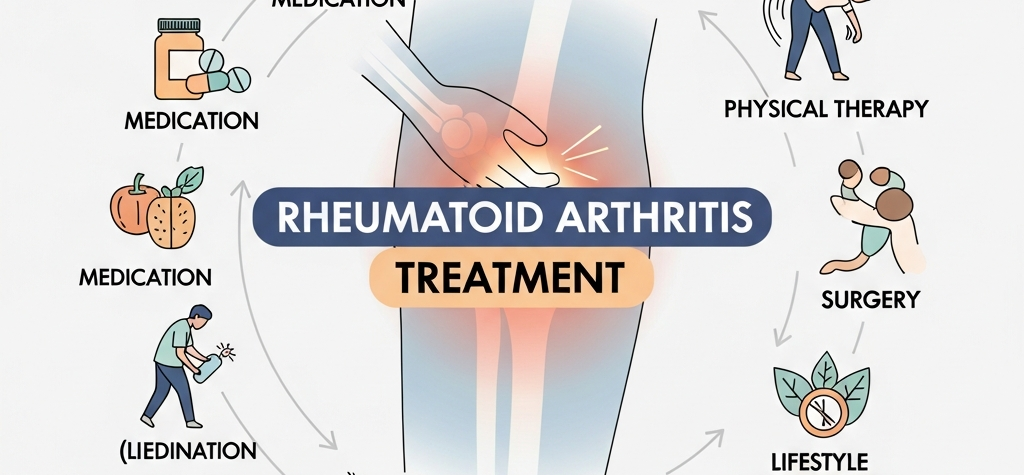
Rheumatoid Arthritis Symptoms and Treatment: Causes, Diagnosis, and Living With RA
Author: RVLNSV PRASAD
Updated On: September 2026
About Us
Author Bio
Editorial Policy
Contact Us
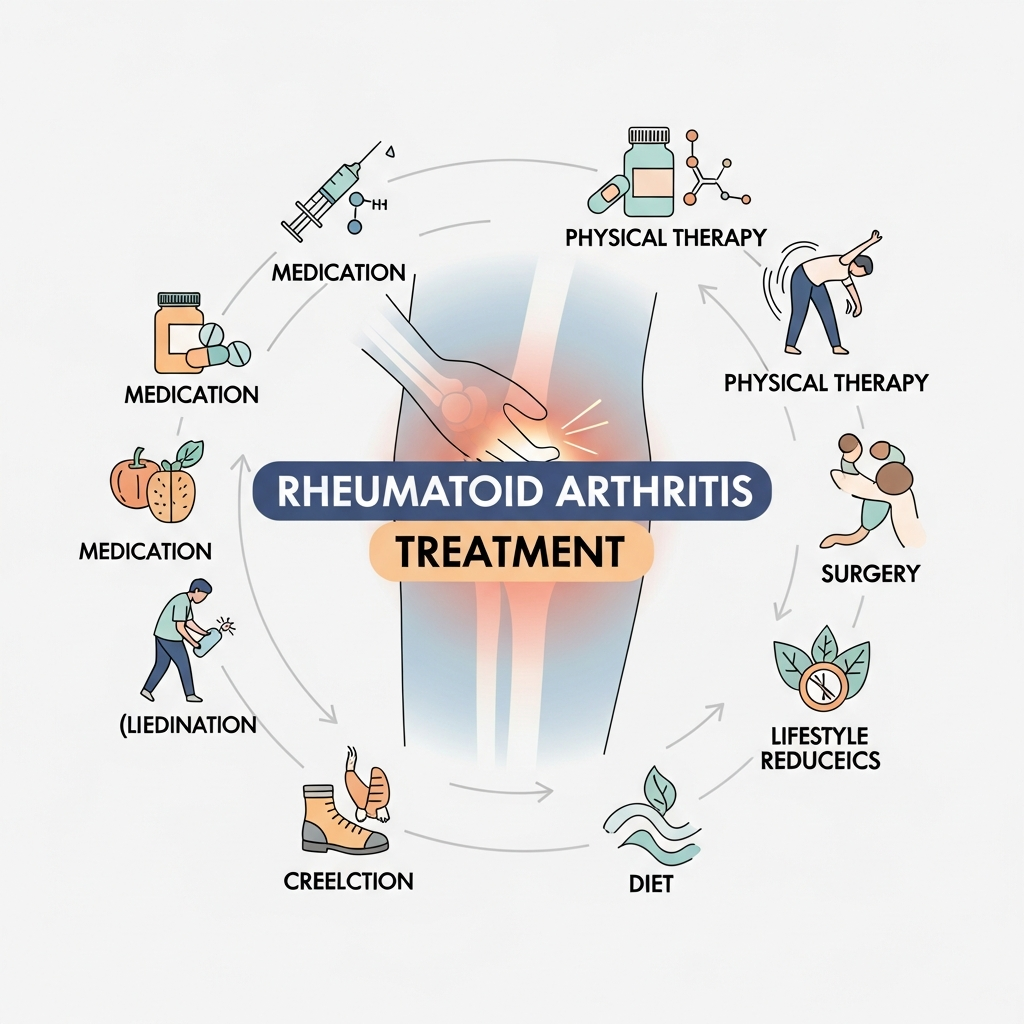
Introduction
Rheumatoid arthritis (RA) is more than ordinary joint pain. It is a long-term autoimmune disease in which the immune system mistakenly attacks tissues around the joints. This can cause pain, swelling, stiffness, fatigue, and difficulty with everyday activities. In some people, rheumatoid arthritis can also affect organs outside the joints, including the lungs, heart, eyes, skin, and blood vessels. NIAMS explains rheumatoid arthritis and its effects on the joints and other parts of the body.
The good news is that treatment has changed considerably over the years. Modern rheumatoid arthritis treatment can reduce inflammation, protect joints, improve physical function, and help many people reach remission or very low disease activity.
The important point is timing. Rheumatoid arthritis can cause permanent joint damage, particularly when active inflammation is left untreated. That is why recognizing symptoms early and getting an appropriate medical evaluation matters. NIAMS explains why early diagnosis and treatment are important.
Quick Answer: What Are Rheumatoid Arthritis Symptoms and Treatment?
Common rheumatoid arthritis symptoms include:
- Painful or swollen joints
- Morning stiffness, often lasting more than 30 minutes
- Warmth and tenderness around joints
- Stiffness after periods of inactivity
- Fatigue
- Reduced grip strength
- Difficulty making a fist
- Low-grade fever in some people
- Reduced appetite
- Symptoms affecting joints on both sides of the body
The hands, wrists, and feet are commonly affected, although rheumatoid arthritis can involve many other joints. It can also produce symptoms outside the joints.
Treatment usually involves disease-modifying antirheumatic drugs (DMARDs). Methotrexate is commonly used as an initial conventional DMARD, while biologic and targeted synthetic DMARDs may be considered when treatment goals are not achieved. NSAIDs and corticosteroids may sometimes be used for symptom control, but they do not replace disease-modifying treatment.
The latest 2025 EULAR recommendations, published in March 2026, continue to emphasize early DMARD treatment, treatment targets, monitoring, shared decision-making, and adjustment of therapy when the target is not achieved. Read the current EULAR rheumatoid arthritis treatment recommendations.
Key Takeaways
- Rheumatoid arthritis is an autoimmune inflammatory disease, not simply wear-and-tear arthritis.
- Early symptoms can be subtle and may resemble other joint conditions.
- Morning stiffness, swelling, tenderness, and symmetrical joint symptoms are common clues.
- No single blood test can diagnose rheumatoid arthritis by itself.
- Rheumatoid factor and anti-CCP antibodies can support diagnosis, but some people with RA have normal blood tests.
- DMARDs are central to rheumatoid arthritis treatment.
- Methotrexate remains an important conventional DMARD.
- Biologic and targeted synthetic DMARDs may be used when necessary.
- Exercise can help maintain strength, mobility, and function when appropriately adapted.
- Diet can support overall health, but no specific food has been proven to cure RA.
- Remission is a realistic treatment goal for many people, although it does not necessarily mean the disease has permanently disappeared.
- Regular monitoring is important because rheumatoid arthritis and its treatment can change over time.
What Is Rheumatoid Arthritis?
Rheumatoid arthritis is a chronic autoimmune disease. Instead of protecting the body normally, the immune system mistakenly contributes to inflammation in the lining of joints.
This lining is called the synovium. Persistent inflammation can damage cartilage, bone, tendons, and other structures around the joint.
RA commonly affects joints symmetrically. For example, someone may develop symptoms in both hands or both wrists.
However, rheumatoid arthritis does not behave exactly the same way in everyone. Some people have relatively mild disease, while others develop significant inflammation and joint damage.
It can also affect parts of the body outside the joints. NIAMS notes that rheumatoid arthritis may involve the heart, lungs, blood, nerves, eyes, and skin. See the NIAMS overview of rheumatoid arthritis.
Rheumatoid Arthritis vs Osteoarthritis
Rheumatoid arthritis and osteoarthritis can both cause joint pain, but they are different diseases.
| Feature | Rheumatoid Arthritis | Osteoarthritis |
|---|---|---|
| Main mechanism | Autoimmune inflammation | Degeneration and structural changes in joints |
| Typical pattern | Often symmetrical | Often uneven |
| Morning stiffness | Often longer-lasting | Usually shorter |
| Swelling | Common | Can occur |
| Fatigue | Common in active disease | Less characteristic |
| Whole-body effects | Possible | Usually localized |
| Treatment | Often requires DMARDs | Lifestyle, exercise, pain management, and other treatments |
This distinction matters because treatment approaches are different.
A person with persistent swollen joints should not assume that the symptoms are simply caused by aging or ordinary wear and tear.
Early Rheumatoid Arthritis Symptoms
Recognizing early symptoms can be difficult because RA does not always begin dramatically.
A person may initially notice stiffness in the hands when getting out of bed. Another person may experience unexplained fatigue and mild joint swelling.
Common early symptoms include:
1. Morning Joint Stiffness
Morning stiffness is one of the symptoms people often notice first.
The stiffness may make it difficult to open jars, grip objects, button clothes, or make a fist.
NIAMS describes joint stiffness lasting longer than 30 minutes, particularly after waking or after prolonged rest, as a common symptom of rheumatoid arthritis. NIAMS: rheumatoid arthritis symptoms.
2. Swollen Joints
Inflammation can cause visible or noticeable swelling.
The joint may also feel warm or tender.
Persistent swelling is particularly important because it can indicate active inflammation rather than ordinary muscle soreness.
3. Pain and Tenderness
RA pain can occur both during movement and at rest.
The discomfort may fluctuate. Some days may feel relatively manageable, while other periods can become much more difficult.
4. Fatigue
RA is not only a joint disease.
Inflammation can be accompanied by substantial tiredness. Fatigue may become especially noticeable when disease activity is high.
5. Reduced Hand Function
Small changes in hand function can sometimes be easier to notice than pain.
For example, a person may struggle with:
- Opening bottles
- Turning keys
- Holding a phone
- Buttoning clothes
- Cutting vegetables
- Carrying bags
- Making a fist
These functional changes are worth discussing with a healthcare professional if they persist.
Rheumatoid Arthritis Flares and Remission
RA symptoms may change over time.
A flare is a period when symptoms and disease activity become worse.
During a flare, someone may experience increased:
- Pain
- Swelling
- Stiffness
- Fatigue
- Reduced physical function
Triggers can vary. Stress, infections, excessive activity, and suddenly stopping prescribed medication may be associated with worsening symptoms in some people, although sometimes there is no obvious trigger. NIAMS discusses RA flares and disease activity.
Remission is different.
It generally means disease activity has become very low or there are minimal signs of active disease. Your healthcare team may use clinical assessments and disease-activity measurements to determine whether you are reaching the treatment target.
What Causes Rheumatoid Arthritis?
There is no single known cause of rheumatoid arthritis.
Researchers believe RA develops through an interaction between genetic susceptibility and environmental factors.
Factors associated with rheumatoid arthritis include:
- Family history
- Certain genetic factors
- Smoking
- Obesity
- Periodontal disease
- Some lung conditions
- Environmental exposures
Smoking is one of the best-established modifiable risk factors associated with RA. NIAMS discusses genetic and environmental risk factors for rheumatoid arthritis.
Having a risk factor does not mean that someone will definitely develop rheumatoid arthritis.
Likewise, a person can develop RA without having an obvious family history.
How Is Rheumatoid Arthritis Diagnosed?
There is no single test that can definitively diagnose rheumatoid arthritis.
Doctors generally combine:
- Medical history
- Physical examination
- Blood tests
- Imaging
- Assessment of symptoms and disease pattern
Early RA can be particularly difficult to diagnose because symptoms can resemble other joint diseases. NIAMS explains the diagnostic process and why no single test is sufficient.
Blood Tests for Rheumatoid Arthritis
| Test | What It Can Tell Doctors |
|---|---|
| Rheumatoid factor (RF) | May support an RA diagnosis but is not specific to RA |
| Anti-CCP antibodies | Can provide useful evidence supporting RA |
| ESR | Measures a marker associated with inflammation |
| CRP | Measures another marker associated with inflammation |
| CBC | Can help identify anemia and other blood abnormalities |
| Other tests | May help rule out other conditions or assess overall health |
A positive rheumatoid factor does not automatically mean a person has rheumatoid arthritis.
Likewise, some people with RA do not test positive for rheumatoid factor.
Anti-CCP antibodies can be particularly useful in the diagnostic assessment. However, blood tests need to be interpreted alongside symptoms, examination findings, and other investigations. NIAMS provides detailed information about RF, anti-CCP, ESR, CRP and other tests.
Imaging Tests
Doctors may use:
- X-rays
- Ultrasound
- MRI
X-rays can help monitor structural changes, although early RA may not produce obvious X-ray abnormalities.
Ultrasound and MRI can provide additional information about inflammation and joint damage.
Mayo Clinic explains the role of blood tests, X-rays, MRIs, and ultrasounds in RA diagnosis.
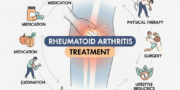
Rheumatoid Arthritis Treatment
The main goal of rheumatoid arthritis treatment is not simply to reduce pain for a few hours.
Treatment aims to control inflammation, prevent or slow joint damage, preserve physical function, and improve quality of life.
Current treatment can include:
- Conventional DMARDs
- Biologic DMARDs
- Targeted synthetic DMARDs
- NSAIDs
- Corticosteroids
- Physical therapy
- Occupational therapy
- Exercise
- Lifestyle measures
- Surgery in selected cases
Treatment is individualized.
The latest EULAR update emphasizes treating RA promptly with DMARDs and adjusting treatment when the target is not achieved. See the 2025 EULAR RA recommendations published in 2026.
1. Conventional DMARDs
DMARDs are medicines that can change the course of rheumatoid arthritis rather than simply masking pain.
Common conventional synthetic DMARDs include:
- Methotrexate
- Leflunomide
- Hydroxychloroquine
- Sulfasalazine
Methotrexate is particularly important in modern RA treatment.
It may be used alone or as part of a broader treatment strategy depending on the person’s disease and circumstances.
Mayo Clinic provides an overview of conventional DMARDs used for rheumatoid arthritis.
These medicines require appropriate medical monitoring.
Do not start, stop, or change a DMARD without discussing it with your healthcare professional.
2. Biologic DMARDs
Biologic medicines target specific parts of the immune system.
Examples include medicines targeting:
- Tumor necrosis factor
- Interleukin pathways
- B-cell activity
- T-cell activation
They can be effective when conventional DMARD treatment does not adequately control the disease.
Because these medicines affect immune pathways, monitoring for infections and other potential adverse effects is important.
3. Targeted Synthetic DMARDs and JAK Inhibitors
Targeted synthetic DMARDs include Janus kinase (JAK) inhibitors.
Examples include:
- Tofacitinib
- Baricitinib
- Upadacitinib
These medicines act on intracellular signaling pathways involved in immune responses.
Their benefits and risks need to be considered carefully for each individual.
The current EULAR recommendations continue to include JAK inhibitors within the treatment strategy while emphasizing appropriate safety considerations and individualized decision-making. See the latest EULAR treatment recommendations.
4. NSAIDs
Nonsteroidal anti-inflammatory drugs, or NSAIDs, can help reduce pain and inflammation.
Examples include ibuprofen and naproxen.
However, NSAIDs do not control the underlying autoimmune disease in the same way as DMARDs.
They can also have important side effects, including gastrointestinal, cardiovascular, and kidney-related risks in some people.
Mayo Clinic discusses NSAID benefits and potential risks in rheumatoid arthritis.
5. Corticosteroids
Corticosteroids can reduce inflammation quickly.
They may sometimes be used for short-term symptom control or during periods of increased disease activity.
However, long-term corticosteroid use can cause significant adverse effects.
For this reason, treatment strategies generally aim to minimize exposure when possible.
What Changed in Rheumatoid Arthritis Treatment in 2026?
One important development for people researching rheumatoid arthritis treatment is the 2025 EULAR update, published online in March 2026.
The update contains nine recommendations and incorporates newer evidence concerning conventional DMARDs, biologic medicines, glucocorticoids, and JAK inhibitors.
The recommendations continue to emphasize:
- Early DMARD treatment
- A defined treatment target
- Regular assessment
- Shared decision-making
- Adjustment of treatment when targets are not reached
- Consideration of safety and individual patient factors
EULAR’s official 2025 RA update is available here.
This is useful for readers because rheumatoid arthritis treatment is not a one-time decision.
A treatment that works well initially may need adjustment later.
A Practical Rheumatoid Arthritis Treatment Roadmap
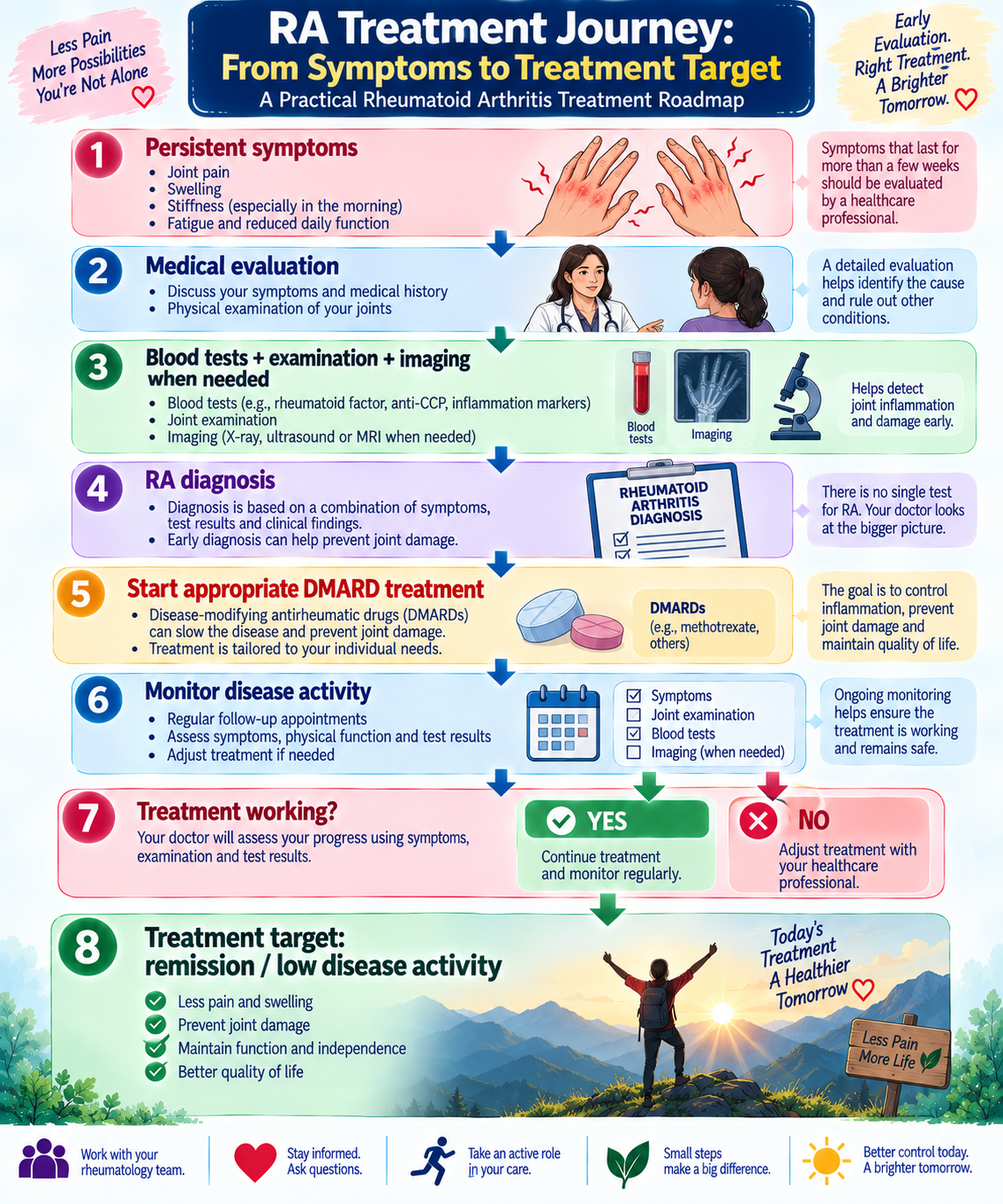
A simple way to understand treatment is
Recognize symptoms → Get assessed → Confirm diagnosis → Start appropriate DMARD treatment → Monitor disease activity → Adjust treatment if needed → Maintain function and quality of life
The exact medication and timing depend on the individual.
A person should not compare their medication plan directly with another person’s treatment.
Different factors can affect treatment choices, including:
- Disease activity
- Existing joint damage
- Other medical conditions
- Previous medications
- Medication response
- Infection risk
- Pregnancy considerations
- Individual preferences
EULAR specifically emphasizes shared decision-making between patients and rheumatology professionals.
Can Rheumatoid Arthritis Go Into Remission?
Yes, remission can occur.
The goal of treatment is often to achieve remission or very low disease activity.
However, remission does not necessarily mean that rheumatoid arthritis has permanently disappeared.
Someone may feel much better while still requiring medication and monitoring.
Stopping medication simply because symptoms have improved can allow disease activity to return in some people.
The treatment plan should therefore be changed only with appropriate medical guidance.
Exercise With Rheumatoid Arthritis
Exercise is an important part of long-term rheumatoid arthritis management.
The goal is not to push through severe pain.
Instead, focus on maintaining:
- Joint mobility
- Muscle strength
- Cardiovascular fitness
- Balance
- Daily function
Useful activities may include:
- Walking
- Swimming
- Cycling
- Gentle strengthening
- Range-of-motion exercises
- Water-based exercise
- Yoga adapted to individual ability
Mayo Clinic notes that regular exercise can help strengthen muscles around affected joints and reduce fatigue, while also advising people to avoid exercising painful, injured, or inflamed joints and to discuss exercise plans with their healthcare team. Mayo Clinic: RA lifestyle and exercise.
A Simple Rule for Exercise
Think:
Move regularly, progress gradually, and respect active inflammation.
A good exercise program should support your daily life rather than leave you exhausted for the next two days.
Diet for Rheumatoid Arthritis
There is no single rheumatoid arthritis diet that can replace medical treatment.
However, a balanced dietary pattern can support overall health.
A Mediterranean-style eating pattern is often discussed because it emphasizes:
- Vegetables
- Fruits
- Whole grains
- Beans
- Nuts
- Seeds
- Fish
- Healthy unsaturated fats
It also generally limits highly processed foods and excessive amounts of added sugars.
The purpose should be overall nutritional quality rather than searching for one “RA-fighting” food.
Fish containing omega-3 fatty acids may be useful for some people, but supplements can interact with medicines and should be discussed with a healthcare professional.
Mayo Clinic also notes that some complementary approaches, including fish oil, have shown promise in certain studies but should be discussed with a healthcare professional before use. Mayo Clinic’s RA treatment and complementary-care information.
What About Gluten, Dairy, and Sugar?
People with RA sometimes notice that particular foods seem to worsen their symptoms.
That experience can be real for an individual, but it does not automatically prove that the food causes inflammation in everyone with RA.
Rather than eliminating multiple food groups unnecessarily, consider keeping a simple food and symptom diary.
Record:
- What you ate
- How much you ate
- Your symptoms
- Sleep quality
- Activity
- Medication changes
Look for repeated patterns over time.
Avoid restrictive diets unless there is a clear medical or nutritional reason.
Protecting Your Hands During Daily Activities
One practical area that deserves more attention is joint protection.
People often focus heavily on medicines but overlook how repetitive daily movements affect painful hands and wrists.
Consider:
- Using larger handles
- Avoiding unnecessarily tight grips
- Using both hands for heavier objects
- Using adaptive kitchen tools
- Taking short breaks during repetitive tasks
- Using assistive devices when recommended
Occupational therapy can help people modify everyday activities and maintain independence. NIAMS describes physical and occupational therapy for RA.
Rheumatoid Arthritis and Work
RA can affect work even when symptoms do not appear severe to other people.
Hand stiffness may make typing difficult.
Fatigue may make long working hours harder.
Pain can interfere with concentration and sleep.
Practical workplace changes may include:
- Ergonomic keyboards
- Voice-to-text software
- Adjustable chairs
- More frequent short breaks
- Changing repetitive tasks
- Using larger-handled equipment
- Flexible scheduling when appropriate
Occupational therapists can help people identify practical ways to make work and daily activities easier.
Rheumatoid Arthritis and Sleep
Pain and stiffness can make sleep difficult.
Poor sleep can then make fatigue and coping with pain harder.
A useful approach is to treat sleep as part of the overall RA management plan rather than as a completely separate problem.
Helpful habits include:
- Keeping a consistent sleep schedule
- Managing pain according to your treatment plan
- Keeping the bedroom comfortable
- Limiting excessive caffeine late in the day
- Using gentle relaxation techniques
- Discussing persistent sleep problems with your healthcare professional
If loud snoring, gasping during sleep, or excessive daytime sleepiness occurs, discuss these symptoms with a healthcare professional because another sleep disorder may be involved.
Stress and Rheumatoid Arthritis
Stress does not mean that RA symptoms are “all in your head.”
RA is a physical autoimmune disease.
However, stress can influence how people experience pain, fatigue, sleep and daily functioning. Some people also notice symptom worsening during stressful periods.
Stress management should therefore be considered supportive care rather than a replacement for medical treatment.
Useful options may include:
- Slow breathing
- Meditation
- Walking
- Gentle movement
- Relaxation exercises
- Social support
- Counseling when needed
Common Rheumatoid Arthritis Treatment Mistakes
Mistake 1: Waiting Too Long
Persistent swelling and morning stiffness should not simply be ignored.
Early assessment can be important because treatment can reduce the risk of ongoing inflammation and damage.
Mistake 2: Relying Only on Painkillers
Pain relief can be useful, but RA treatment generally requires attention to the underlying inflammatory disease.
Mistake 3: Stopping Medicine Without Medical Advice
Feeling better does not automatically mean the disease has disappeared.
Mistake 4: Completely Avoiding Exercise
Too much activity during an active flare can be unhelpful, but complete inactivity can also lead to weakness and loss of function.
A better approach is individualized activity.
Mistake 5: Believing One Food Can Cure RA
There is no scientifically established food that cures rheumatoid arthritis.
Healthy eating should complement, not replace, medical treatment.
Mistake 6: Ignoring Fatigue
Fatigue can be an important part of active RA.
Tell your healthcare professional if tiredness is interfering with normal activities.
A Simple Daily Rheumatoid Arthritis Routine

A practical routine could look like this:
| Part of day | Practical approach |
|---|---|
| Morning | Allow extra time for stiffness and gentle movement. |
| Breakfast | Choose a balanced meal. |
| Work | Use ergonomic tools and take movement breaks. |
| Afternoon | Walk or perform suitable physical activity |
| Evening | Prepare for restful sleep. |
| During a flare | Reduce unnecessary strain and follow the medical treatment plan. |
| Throughout the day | Take prescribed medicines as directed. |
The goal is consistency rather than perfection.
Track Your Symptoms
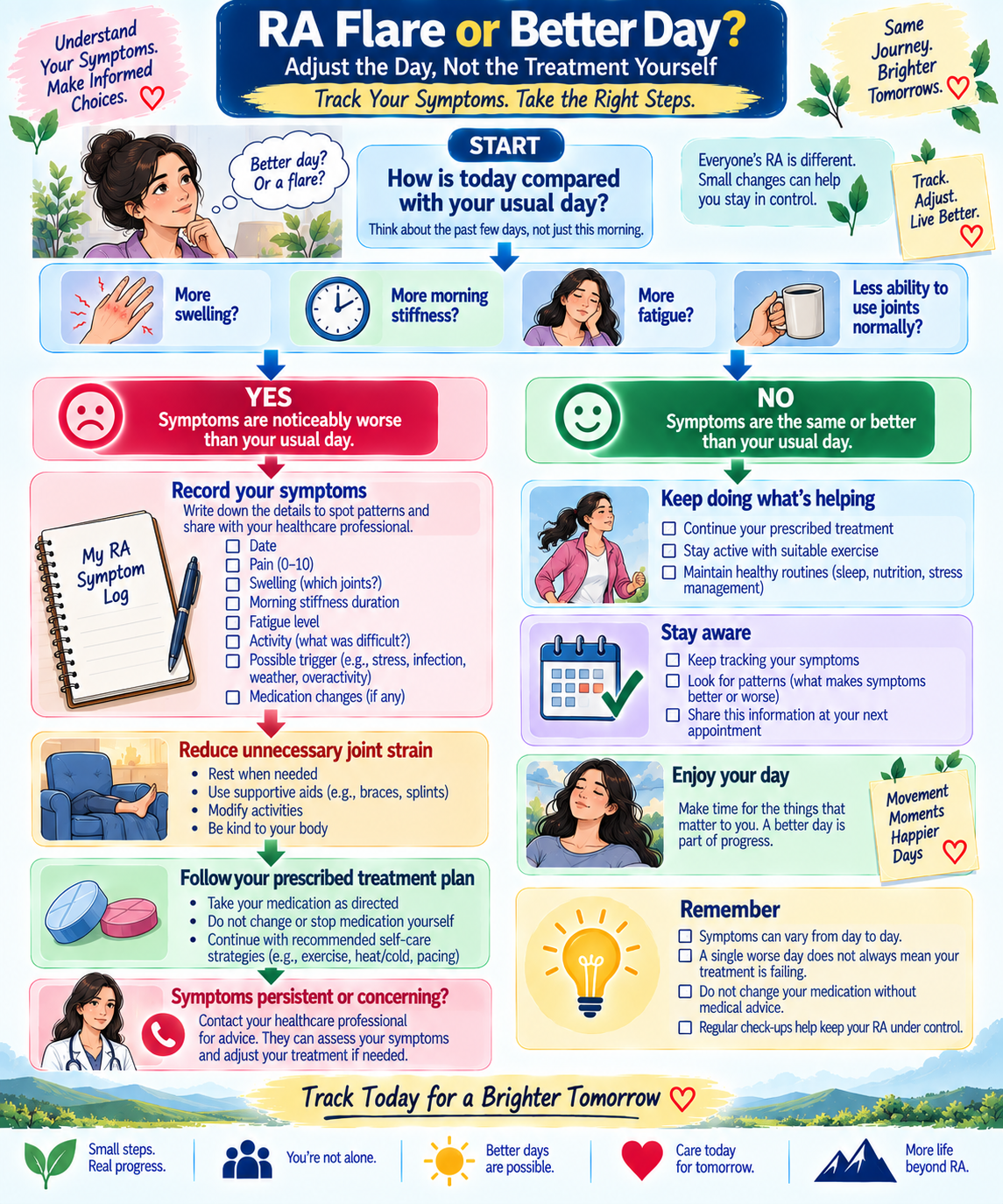
A simple symptom diary can provide useful information during medical appointments.
Record:
- Morning stiffness duration
- Swollen joints
- Pain level
- Fatigue
- Sleep quality
- Physical activity
- Medication changes
- Possible triggers
- Problems with work or daily activities
This information can help your healthcare professional understand patterns that may be difficult to remember during a short appointment.
When Should You See a Doctor?
Consider medical evaluation if you have persistent:
- Joint swelling
- Morning stiffness
- Hand or wrist pain
- Joint tenderness
- Reduced ability to use your hands
- Unexplained fatigue
- Multiple painful joints
You should not wait for every classic symptom to appear before seeking an evaluation.
RA can be difficult to diagnose early, which is why clinicians use several pieces of information rather than relying on one symptom or test.
When Rheumatoid Arthritis Symptoms Need Urgent Attention
Seek urgent medical attention for symptoms such as:
- Severe chest pain
- Serious breathing difficulty
- Sudden weakness or neurological symptoms
- Severe infection symptoms while taking immune-modifying medication
- A suddenly very hot, swollen joint accompanied by fever
- A serious medication reaction
These symptoms can have causes unrelated to RA, but they should not be ignored.
A People-First Way to Think About Rheumatoid Arthritis
One of the most useful changes in thinking is to stop measuring RA only by pain.
Ask broader questions:
- Can I open a jar?
- Can I walk comfortably?
- Can I sleep through the night?
- Can I work without excessive fatigue?
- Can I use my hands normally?
Are my joints becoming more swollen?
These questions describe how rheumatoid arthritis affects real life.
A treatment plan should therefore consider both disease activity and function.
My Practical Insight for Living With RA
For someone newly dealing with rheumatoid arthritis, the amount of information can feel overwhelming.
It is easy to focus on the name of the medication, the latest diet, or the newest supplement.
A more useful approach is to build a simple system:
Know your symptoms → Understand your treatment → Monitor changes → Protect your joints → Stay appropriately active → Communicate with your healthcare team.
You do not need to change everything at once.
Small practical improvements can make daily activities easier while medical treatment addresses the underlying disease.
Frequently Asked Questions
Is rheumatoid arthritis curable?
There is currently no established cure that permanently eliminates rheumatoid arthritis. However, modern treatments can control disease activity and help many people achieve remission or very low disease activity.
What is the first treatment for rheumatoid arthritis?
DMARD treatment is central to RA management. Methotrexate is an important conventional DMARD and is commonly used in initial treatment strategies, depending on the individual.
The exact treatment should be determined by a healthcare professional.
Can rheumatoid arthritis go away?
Symptoms can become very well controlled, and remission is possible. However, rheumatoid arthritis is considered a chronic condition, so ongoing monitoring is generally important.
Is rheumatoid arthritis worse in the morning?
Morning stiffness is common in RA and can last longer than the brief stiffness sometimes associated with osteoarthritis.
What blood test confirms rheumatoid arthritis?
There is no single blood test that confirms RA in every person.
RF and anti-CCP antibodies can provide important diagnostic information, while ESR and CRP can provide information about inflammation. Doctors interpret these results together with symptoms and physical examination findings.
Can exercise help rheumatoid arthritis?
Appropriately selected exercise can help maintain muscle strength, mobility, physical function, and overall fitness.
Exercise should be adapted to the person’s symptoms and disease activity.
Can diet cure rheumatoid arthritis?
No specific diet has been established as a cure for RA.
A nutritious dietary pattern can support general health and may complement medical treatment.
Can rheumatoid arthritis affect organs other than joints?
Yes.
RA can affect areas outside the joints, including the lungs, heart, eyes, skin, blood, and nervous system.
Should I stop rheumatoid arthritis medicine when I feel better?
Do not stop prescribed RA medication without discussing it with your healthcare professional.
Feeling better can be a sign that treatment is working rather than proof that the disease has permanently disappeared.
Conclusion
Rheumatoid arthritis is a chronic autoimmune disease that can affect much more than the joints.
The most important rheumatoid arthritis symptoms to recognize include persistent joint swelling, pain, tenderness, morning stiffness, fatigue, and reduced function. Symptoms may develop gradually, which can make early diagnosis challenging.
Fortunately, treatment has advanced substantially.
DMARDs, biologic medicines, and targeted therapies can help control inflammation and reduce the risk of ongoing joint damage. Exercise, joint protection, healthy nutrition, adequate sleep, and practical lifestyle changes can complement medical treatment.
The latest EULAR recommendations published in 2026 reinforce the importance of early DMARD treatment, monitoring disease activity, treatment targets, and shared decisions between patients and healthcare professionals.
If you have persistent joint swelling or prolonged morning stiffness, do not assume it is simply aging or ordinary wear and tear. Getting evaluated early can make an important difference in long-term management.
Author Note
RVLNSV PRASAD creates health and wellness content with a focus on evidence-based, reader-friendly information.
This article is intended to explain rheumatoid arthritis symptoms, diagnosis, and treatment in simple language. It is not a substitute for an individualized medical evaluation.
Medical Disclaimer
This article is for educational purposes only. Rheumatoid arthritis diagnosis and treatment should be provided by a qualified healthcare professional. Medication choices depend on individual health conditions, disease activity, previous treatment, risks, and other factors.
Do not start, stop, or change prescription medication based solely on information in this article.
Fitness Disclaimer
Exercise recommendations should be adapted to your physical condition and rheumatoid arthritis activity level. If you have significant pain, swelling, injury, severe fatigue, or another medical condition, consult your healthcare professional before beginning or changing an exercise program.
Sources
- EULAR — 2025 Rheumatoid Arthritis Treatment Recommendations
- EULAR — 2025 RA Update Published March 2026
- NIAMS — Rheumatoid Arthritis: Diagnosis, Treatment and Steps to Take
- Mayo Clinic — Rheumatoid Arthritis Symptoms and Causes
- Mayo Clinic — Rheumatoid Arthritis Diagnosis and Treatment
- Mayo Clinic Healthcare — Rheumatoid Arthritis Treatment
Related posts
- Nutrient-8 Dense Foods for Immune System Support: A Comprehensive Guide to Boosting Your Immunity Naturally
- 8 Lower Back Stretches That Actually Work for Pain and Mobility
- 4 Holistic Approaches to Managing Chronic Pain: A Comprehensive Guide
- 11 Interesting Facts About Walking
- 9 Benefits Of Regular Exercise And Fitness
- Category
- Home